

The novel ‘The Other Hand’ also known as ‘Little Bee’ by Chris Cleave is written in a dual narrative style, through the eyes of Little Bee, a Nigerian refugee, and Sarah, a British magazine editor. The title ‘The Other Hand’ (2008) sounds odd, but it refers to the novel’s exploration of the treatment of refugees by the British Asylum system.
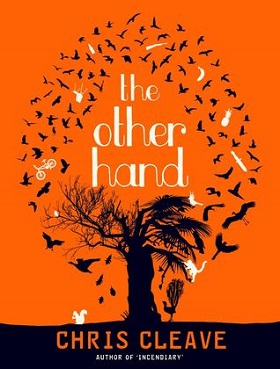
The story of Little Bee is told sympathetically in the background of the conflict between the oil extracting companies and the local native population. I was fascinated by the narrative, the observations, and the language of the story of a run-away Nigerian girl escaping the White Oil Colonizers.
I highlight in this review only the amazing description of the ‘future’ of the native Nigerian population through the eyes of Little Bee. I quote a few paragraphs in the words of Little Bee:
‘Freedom for Sarah (the editor) is a long future where she can live the life of her choice. Freedom for a girl like me (Nigerian refugee) is getting through to the end of each day alive.’
‘The future is another thing. The future is my country’s biggest export. It leaves so quickly through our sea ports, most of my people have never seen it and they do not know what it looks like. In my country the future exists in gold nuggets hidden in the rock, or it collects in dark reservoirs far underneath the earth. Our future hides itself from the light, but your people come along with a talent for divining it. In this way, fraction by fraction, our future becomes your own. I admire your sorcery because of its subtlety and variety. In every generation the extraction process is different. It is true we are naive. In my village it took us by surprise that the future could be pumped into 42 gallon barrels and shipped off to a refinery. It happened while we were preparing the evening meal. It happened so quickly, women grabbed their children and ran into the jungle. We hid while our men started to fight.
‘And at the refinery by a process of distillation my village’s future was separated into its fractions. The heaviest fraction, the wisdom of our grandparents, was used to tar your roads. The middle fraction, the careful savings of our mothers from the small coins they put aside after the harvest time, was used to power your cars. And the lightest fraction of all, the fantastical dreams of our children in the stillest hours of full moon nights, well they came off as gas that you bottled and stored for winter. In this way our dreams will keep you warm. Now that they are part of your future, I do not blame you for using them. You probably do not see where they came from.
‘You are not bad people. You are blind to the present and we are blind to the future’.
What more powerful language can express the relation between the colonizers and the colonized population. While the narrative may ramble along with a story entangling the lives of Sarah, her husband and her lover, the image portraying the experiences of Little Bee and her people keeps one glued to the book. Very much worth a read.

 Unni-Verse