

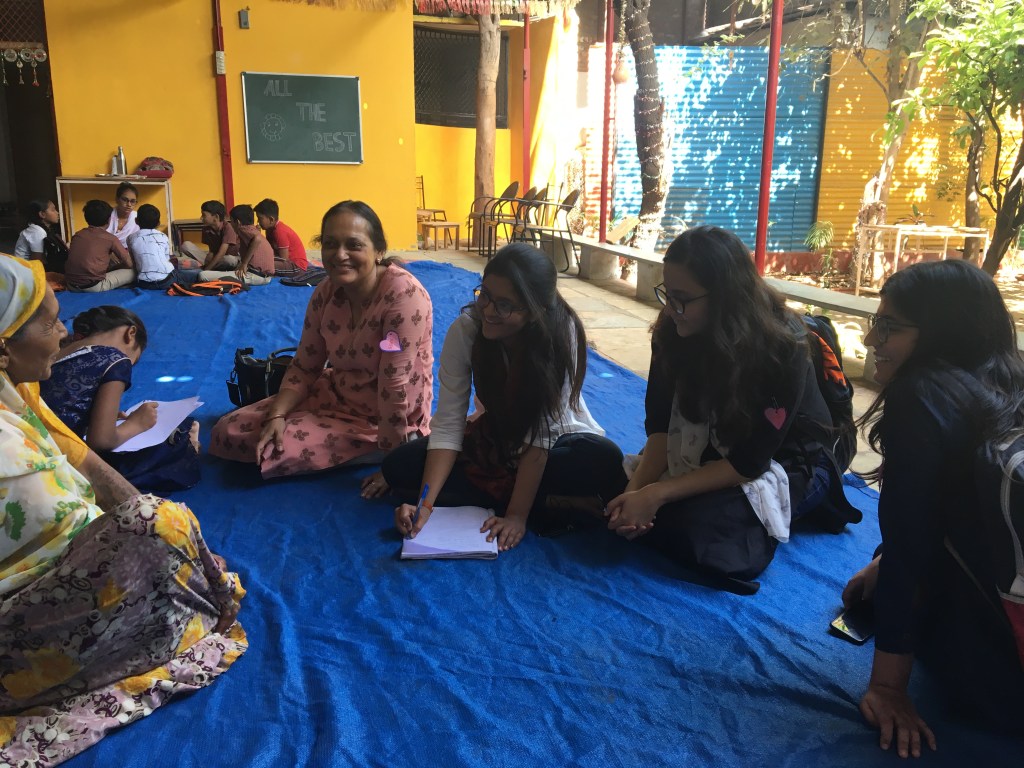
How does a researcher doing fieldwork blend into the surroundings and not appear conspicuous? Hemangini Gupta (2025), conducting fieldwork in the startup capital of India, Bangalore, describes the dilemma faced by ethnographers:
‘My desire to try to obliterate our differences and somehow to conduct fieldwork as though I had no history in the city or that my geographies of familiarity in the city could be concealed was in vain. I tried to blur caste and class rules by taking local buses into parts of the city I had never been to before, to eat unfamiliar food at smaller darshinis, and tried to never talk about where I went on my personal time. If I were new to India, perhaps everything about me might seem “strange” and “alien” to my interlocutors at Captivate, yet here as a Bangalorean back “at home,” I knew I was being assessed when people visited my fieldwork apartment or, once, at my birthday celebration met my “other” world of friends and family.’
Being born and bred in urban India, I was fascinated with rural India and village life. When I started working with my PhD supervisor, he was conducting a large-scale survey. This survey was in the tribal belt of Gujarat state. He asked me to work in the field with the investigators and research assistants. I had just arrived from South India and did not speak the local language, Gujarati. The Professor said that it did not matter, I was to observe the fieldwork and supervise the investigators. I was thrilled. This would give me an opportunity to see village India and the lives of the rural people.
We set out to live in the district headquarters and travel daily to the villages. I was useless in the field as I did not speak the language and understood very little. But I learned a lot. In those days the tribal villages were less developed. People lived in hamlets scattered across undulating terrain. We walked many kilometers each day, in the sun and rain. During the rains the paths became slushy, and we waded in angle deep mud!! In the late evenings we boarded the local buses, devoid of passengers, to get back to the district headquarters. It was amazingly safe for young girls to travel in local buses, unescorted, in the state of Gujarat.
I enjoyed it all. But my great worry was how to merge with the surroundings and not stand out in the crowd of investigators. I discarded my jeans and T-shirts and clothed myself in long ankle length skirts and tops. The local women wore long skirts too, but my new attire did nothing to make me look less conspicuous! I just stood out! And if I happened to open my mouth to say something, that was it!! Finally, I gave up. The class, caste, urban-rural, differences were so strong, that dress or language was not going to camouflage it.
I learned a lesson. One cannot change one’s looks and background. But one can be courteous and genuinely accept the culture of the people. The village folk were not well-off, but their hospitality was heartwarming. They offered watered-down tea/coffee and frugal food. Food, and the vessels one eats in, are major barrier to interaction and symbols of inequality in the country. I drank and ate the food and drink offered without prejudice. This made the experience comfortable for me. It was also comfortable for the village folk.
Later in my fieldwork in urban India, I was faced with the same dilemma. My research focuses on labor. Hence, my field work led me to the slums and lower income housing in many cities in India. I also visited small scale factories in the city. Caste and class differences stood out just as sharply as they did in my early days in the villages. But now I was more seasoned. I was more adept at interacting, my local language skills had improved, and my social demeanor made me less conspicuous. Or at least I thought so. I hope my respondents found my presence more acceptable! It is also possible that times have changed. The working classes of India have become more attuned to researchers and government agencies plying them with questions about every phase of their lives!! We were just one more such entity to tolerate.
I take this opportunity to thank all my respondents, field investigators, research assistants, research associates, and students. Over the years, they have helped me build up a body of research work on labor in India.
Reference: Hemangini Gupta (2025), Experimental Times: Startup Capitalism and Feminist Futures in India, University of California Press, Oakland, California.

 Unni-Verse