

New Zealand is called ‘The Shaky Isles’. Mãori legend tells how Maui used the jawbone of his ancestor baited with blood from his nose as a fish hook to pull up the North Island. New Zealand literally did rise from the sea millions of years ago when it was part of the landmass of the southern hemisphere known as Gondwana.
Today New Zealand straddles the boundary between the Indian-Australian and the Pacific plates, which move independently like ice floes. Tremendous natural energy is released, resulting in many spectacular geological occurrences including mountain building, earthquakes and volcanic activity. There are earth quakes nearly everyday in New Zealand, but we don’t feel because of the moving plates. Major earthquakes have resulted in significant land changes, confirming New Zealand is “The Shaky Isles”!
The above I learned at the Waiotapu geothermal park. It had an active mud pool and many pools with geothermal activity. Ngati Tahu-Ngati Whaoa are a river people whose realm consists of the Waikato River and numerous geothermal fields. This geothermal resource has been utilised for more than 750 years. Rainbow Mountain was used as a fortress during conflicts and Waiotapu sustained the tribe for many generations.
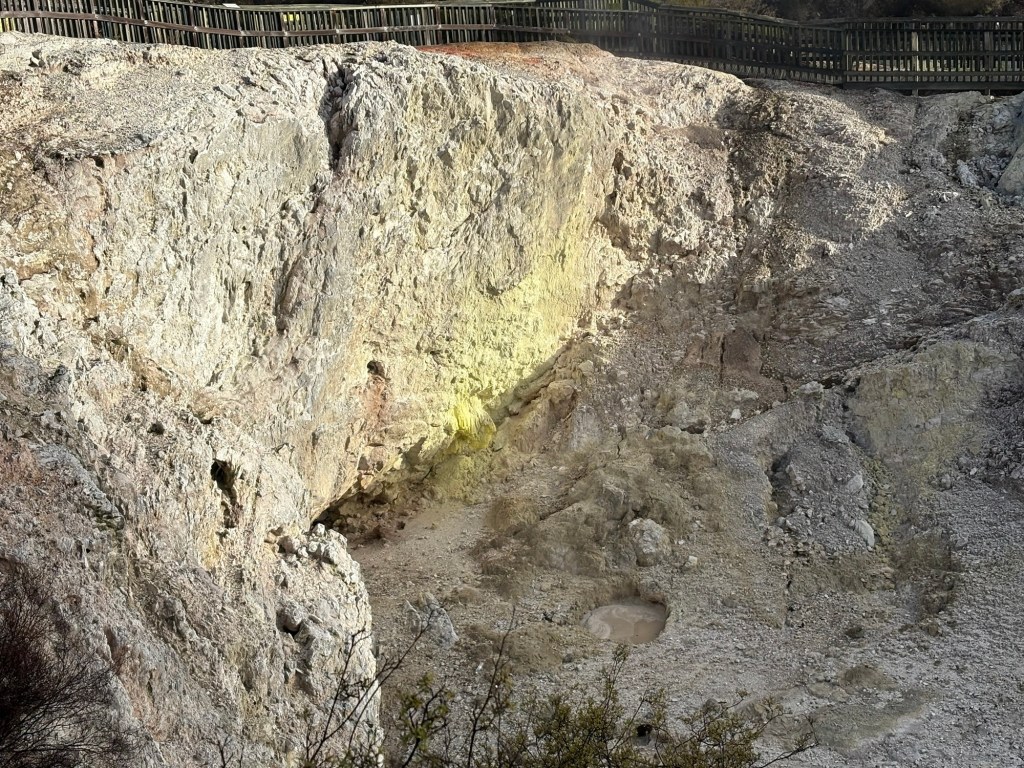
There was a green coloured geothermal crater. The volcanic activity releases many minerals including sulphur and various gases. Sulphur crystals have formed beautiful formations on the wall above the vents in this crater. There are some of the few chlorine pools in the area that may have been used by the local people to cook in.
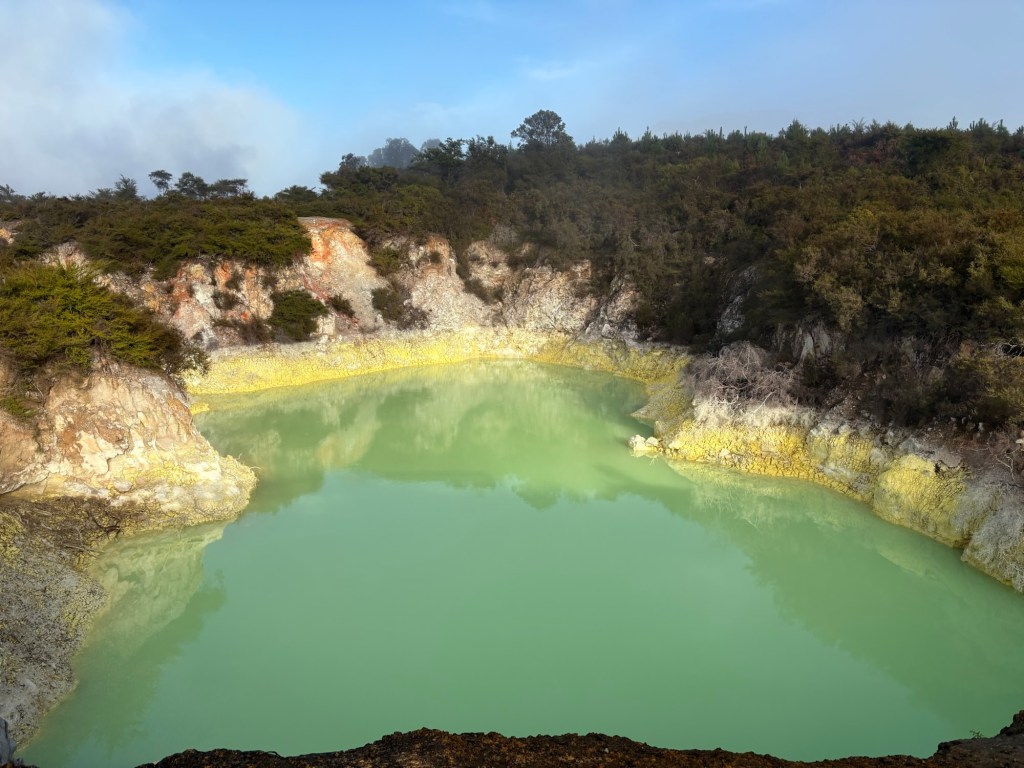
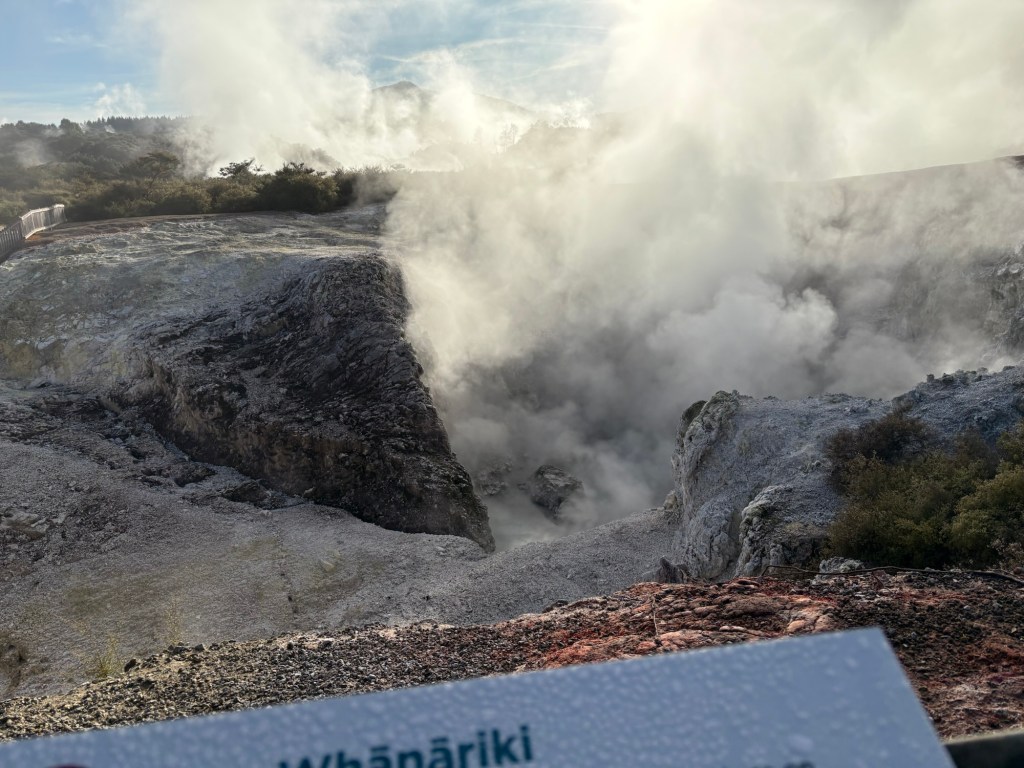

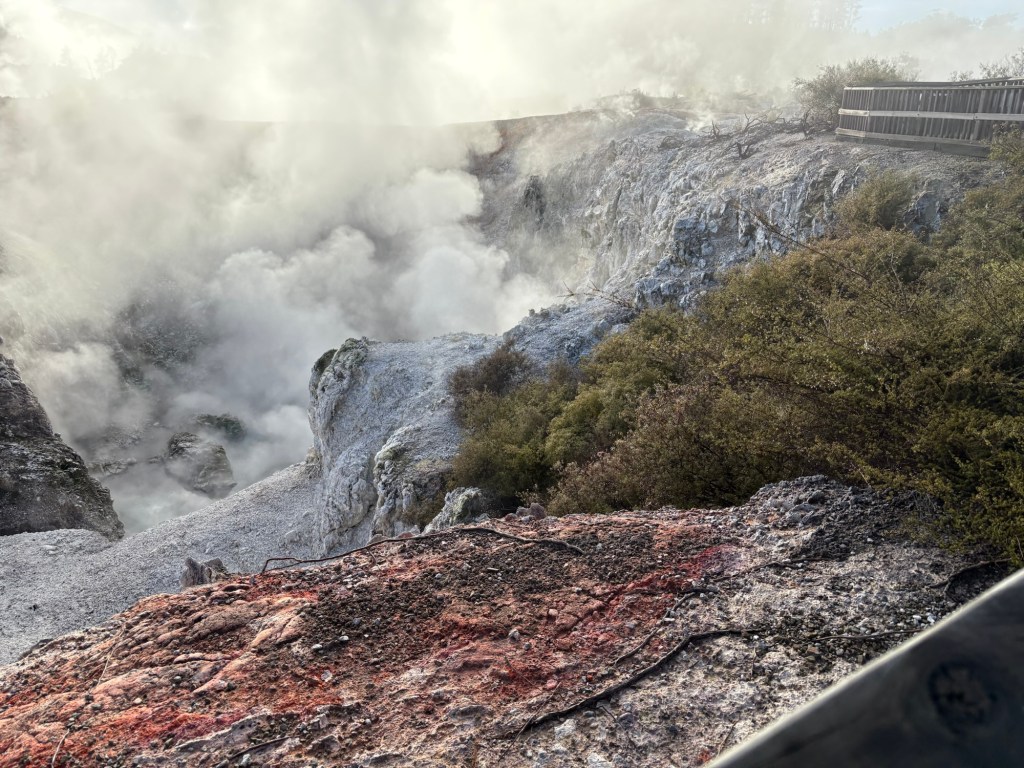
The Champagne Pool is the largest hot spring in New Zealand with a surface temperature of 74 degrees Celsius. The bubbles caused by carbon dioxide provide the Champagne like effect in the water. It was formed an estimated 700 years ago by a hydrothermal eruption, some of the minerals contained in the water include gold, silver, mercury, sulphur, arsenic, thallium, and antimony!! Unfortunately we did not find any gold or silver! No There was a fog of vapour and gasses over the crater which gave us poor visibility.
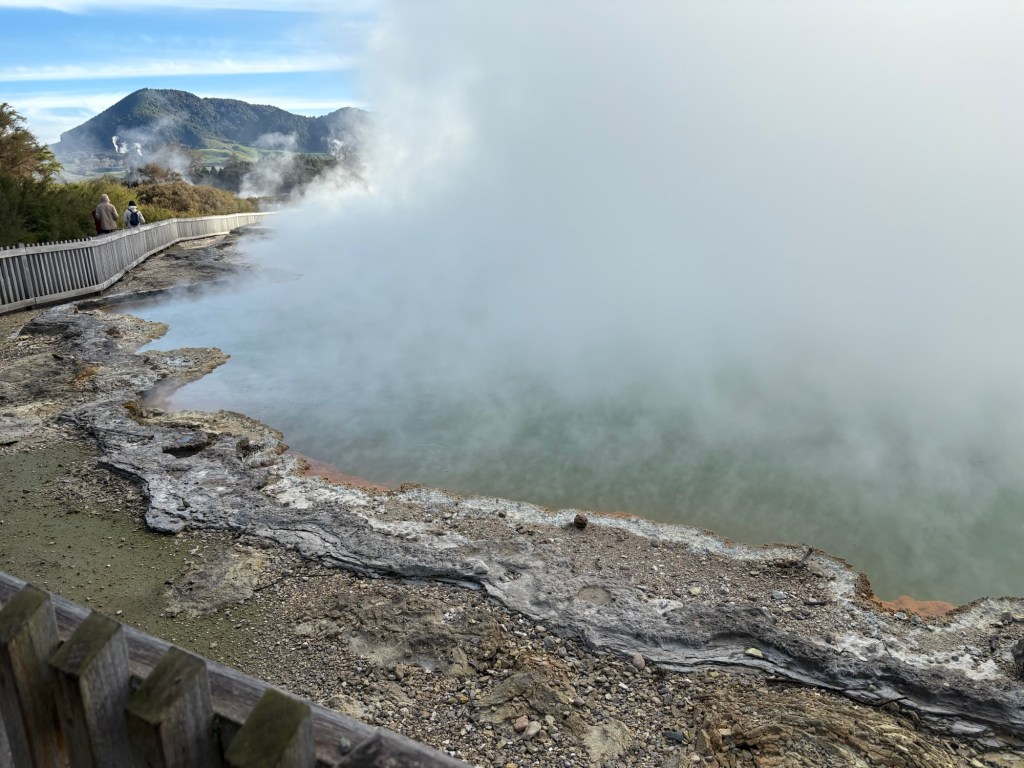


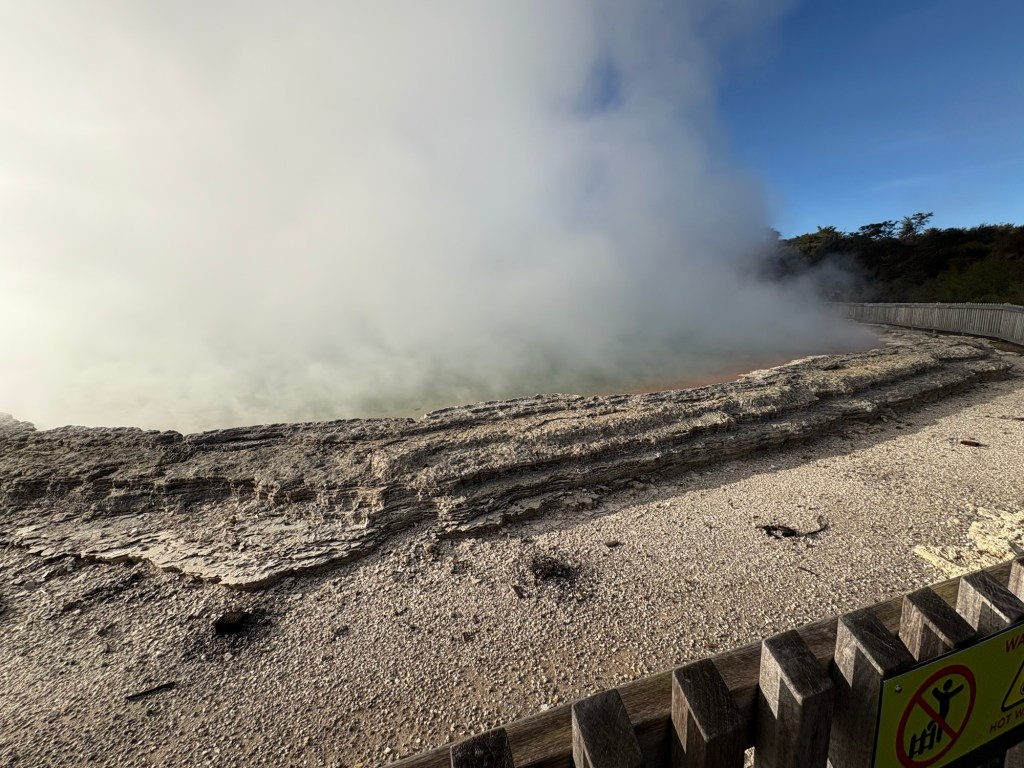
Some of the pools of mud contained unrefined crude oil. In the late 1800s and early 1900s the sludge on the top of these pots was skimmed off to burn in kerosene lanterns. Heated by thermal vents from below the surface, the temperature of the mud is about 50 degrees Celsius. The colour and consistency of the mud is from a combination of small parts of graphite and crude oil. These pools are rainwater fed and fluctuate throughout the year.
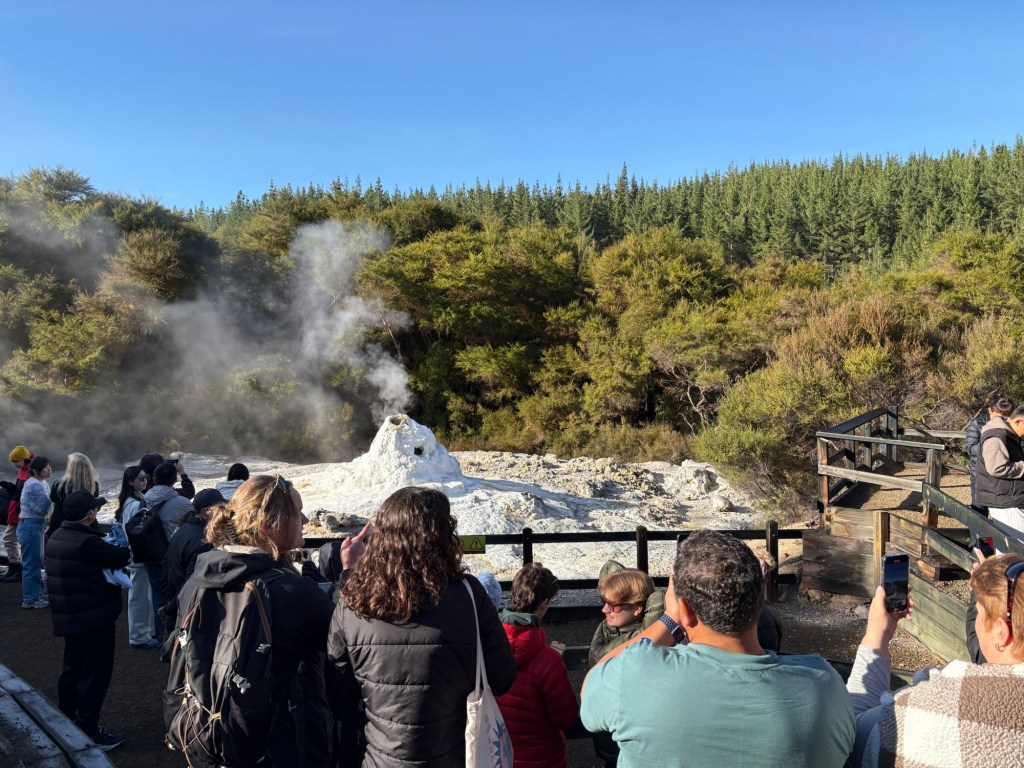
We visited the Lady Knox Geyser where everyday at 10.15 am the discovery of the geyser is enacted. In 1901, the first open prison in New Zealand was established at Waiotapu, its object was to accommodate some of the better-behaved prisoners from around the jails of the Rotorua Lakes District. A gang of those prisoners were amazed when the geyser erupted. It was so discovered when they first added soap to the hot water to wash their clothes! Lady Knox eruption is enacted by adding soap to the mouth of the geyser. Eruptions produce a jet of water reaching up to 20m and can last for over an hour. The visible spout is made of rocks placed around the base of the spring to enhance the eruption; over the years silica from the eruptions has built up to give a white cone-shaped appearance.

Waimangu Valley
The Echo Crater in the valley is an elongated crater originally excavated by the 1886 Tarawera Eruption sequence, and it has been reshaped by subsequent hydrothermal explosions.
By the late 1890s, erosion of the soft volcanic materia covering the surrounding land gradually filled the floor of Echo Crater until the lakelet had been almost completely displaced. Visitors to the Waimangu Geyser could walk across the resulting thermally active sandy floor, which became known as Frying Pan Flat, and could approach the geyser during its quiescent stages.


The hyrdothermal eruption of April 1917 re-excavated the south-western end of Echo Crater, almost completely blowing away Frying Pan Flat. The new basin formed by this outbreak filled with rainwater and with geothermal fluids discharging from vents in its floor and formed Frying Pan Lake as we see it today.
The Inferno Crater: The geothermal fluid comprising interno Crater Lake has a unique cyclic rise and fall in water level, ranging between overflow and as low as 12 metres below that. The colour of the lakelet changes depending on the amount of turbulance it is undergoing. Although often a dull grey when the level is low, it can assume an intensely brilliant sky blue colour under ideal circumstances. This appearance is caused by finely divided silica that is held in suspension in the water.


We had to climb a long flight of steps to the Inferno crater. Nearly gave up but I am glad I decided to clamber up. And that was our trip and how I saw the amazing geothermal volcanic region around Rotorua!

 Unni-Verse