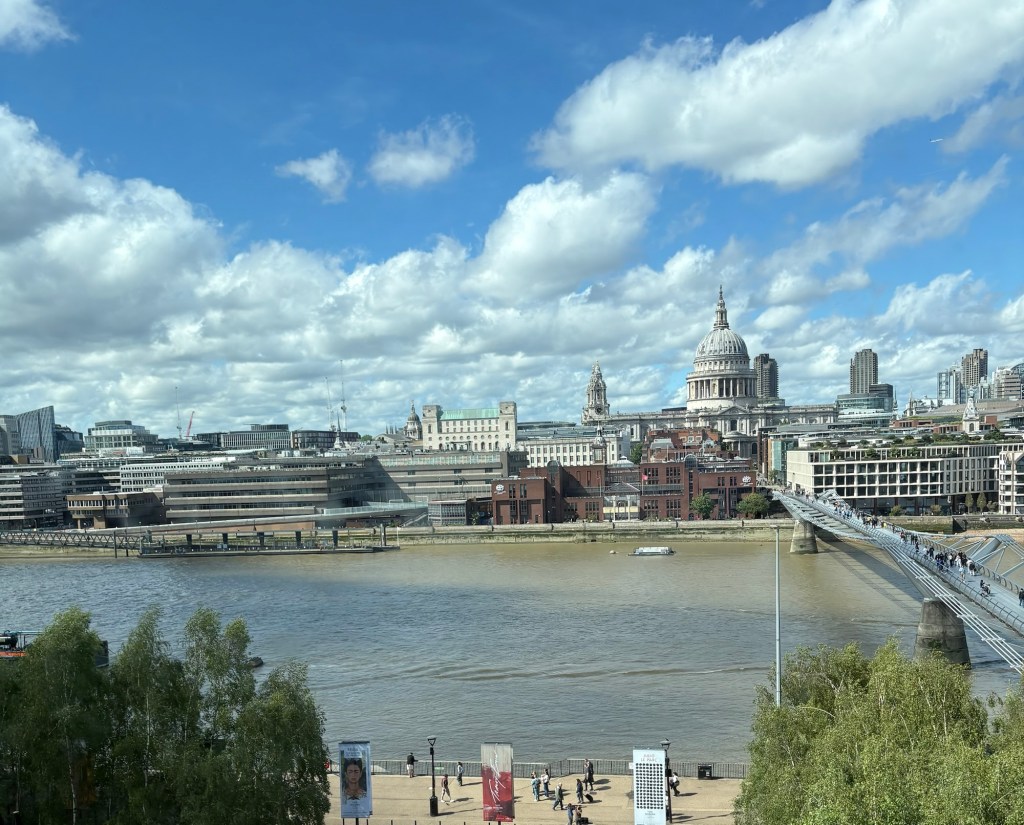
Our visit to London every year is incomplete without a visit to see the art and installations at Tate Modern, Bankside. So we ventured out on a sunny afternoon to my favourite spot in London, south bank of the river Thames. On checking the internet I noted that there were a couple of art pieces of Andy Worhol and one price of Picaso’s on display. My cousin and I had visited the Andy Worhol Museum at Pittsburg in the United States many years ago. Here is the blog post I wrote on Andy Worhol. ‘Andy Warhol, 1928-1987, was an artist, film director and producer. He was a leading figure in what may be called pop art, painting imaginary from the popular or mass culture, which began around the late 1950s. This simply means painting the mundane everyday things in life’.
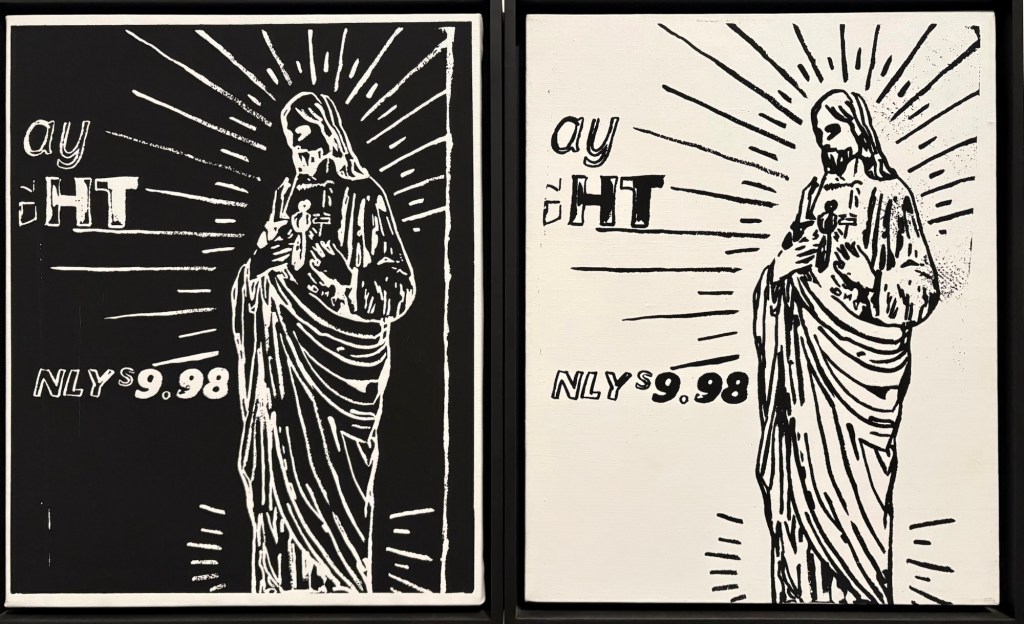
‘Andy Worhol produced a series of black and white screenprinted paintings called ‘Ads and Illustrations’ in the mid-1980s, from newspaper and magazine advertisements. He traced it by hand and screenprinted onto canvas. Warhol was as a well-known artist was associated with Pop Art in the 1960s. It reflected Warhol’s interest in consumer culture, particularly images of war, religious signs, and advertisements for fast food’. The painting displayed in the Tate was titled Christ $9.98 and showed the postitive and negative prints. It uses an image from an advertisement for a night light. A practising Christian and a gay man, this work was produced at the height of the HIV epidemic when a number of his friends lost their lives.
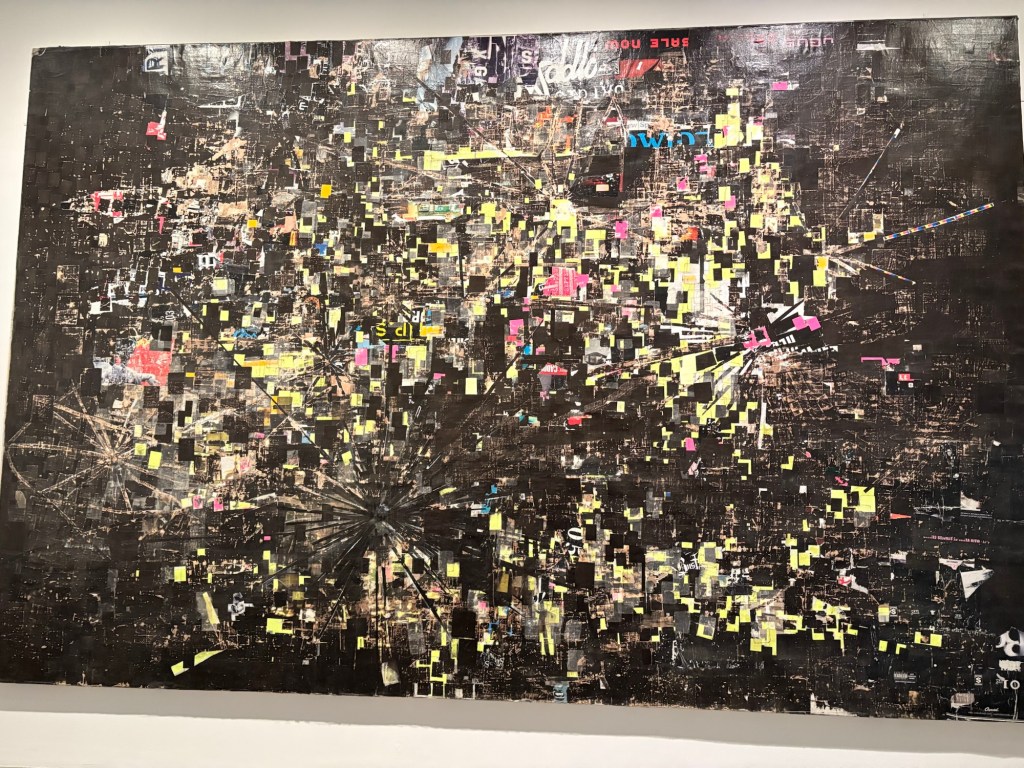
Another fascinating pop art was Mark Bradford’s Los Moscos, a large-scale collage of torn bits of posters, flyers and papers he found in the streets around his studio in Los Angeles. This abstract composition resembles an aerial view of a city at night. Fragments of the original advertising texts are visible and indicate the diversity of people and ideas resonating across neighbourhoods.
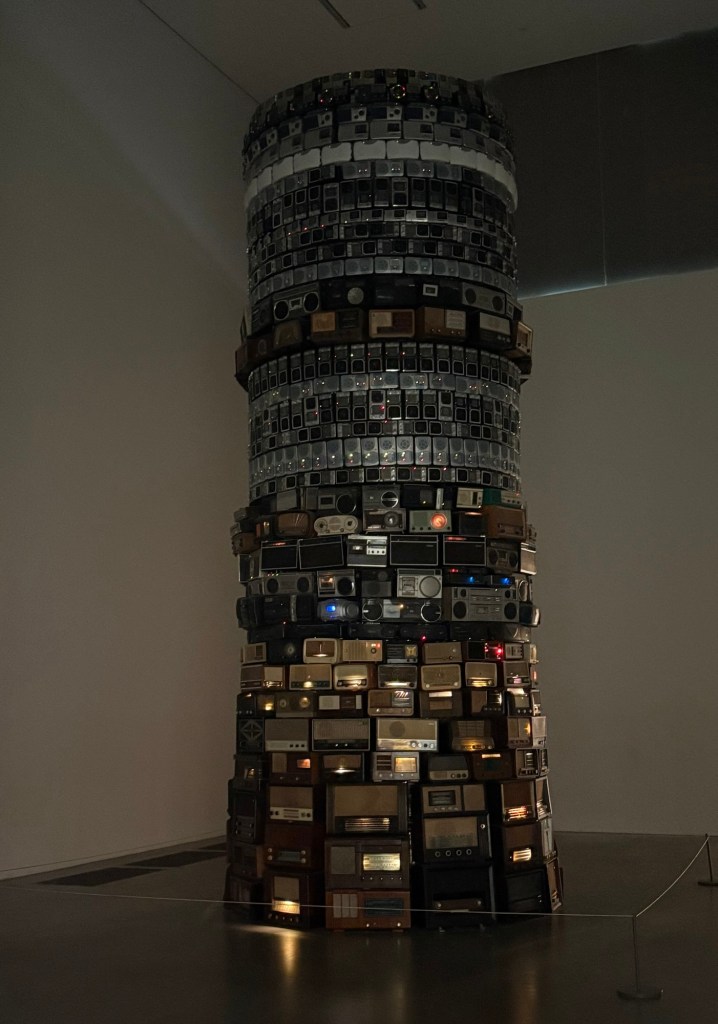
I was disappointed that the Tate gallery did not have the large installations of incredible imagination that generally appeared in th emain hall on the ground floor. Once we saw art being created live by artists sweeping rice grain on the floor! I was pleasantly surprised and delighted to see the large installation of Cildo Meireles, Babel, 2001. It is a large-scale sculptural installation in the form of a circular tower made from hundreds of second-hand analogue radios stacked in layers. The radios are tuned to a multitude of different stations, adjusted to the minimum volume. They compete with each other and create a cacophony of low, continuous sound, resulting in inaccessible information, voices or music. The idea comes from the biblical story of the Tower of Babel, a tower tall enough to reach the heavens. God was offended and caused the builders to speak in different languages. No longer able to understand one another, they became divided and scattered across the earth, and so began all mankind’s conflicts.
I was happy to see the work of an artist from South Asia, Shashi Bikram Shah, the Royal Massacre Series. It is the first body of work by a Nepali artist to enter Tate’s collection. This depicts the brutal assassination of the entire Royal Family by the Crown Prince Dipendra after which he turned the gun on himself. He died just three days after being declared king.
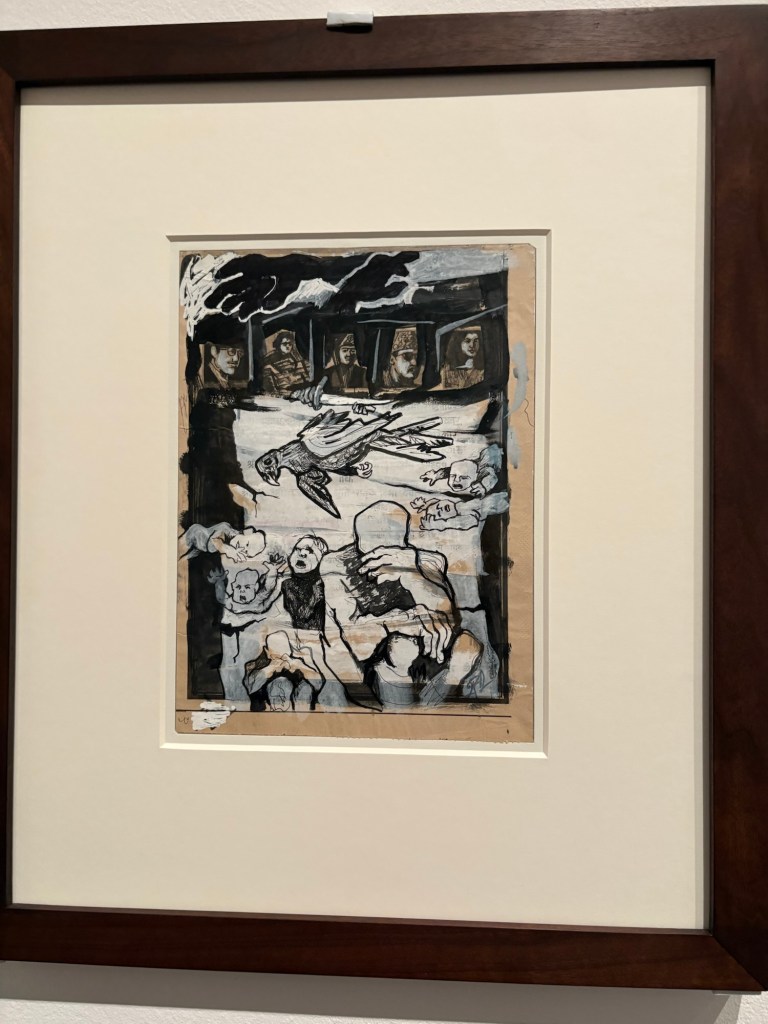
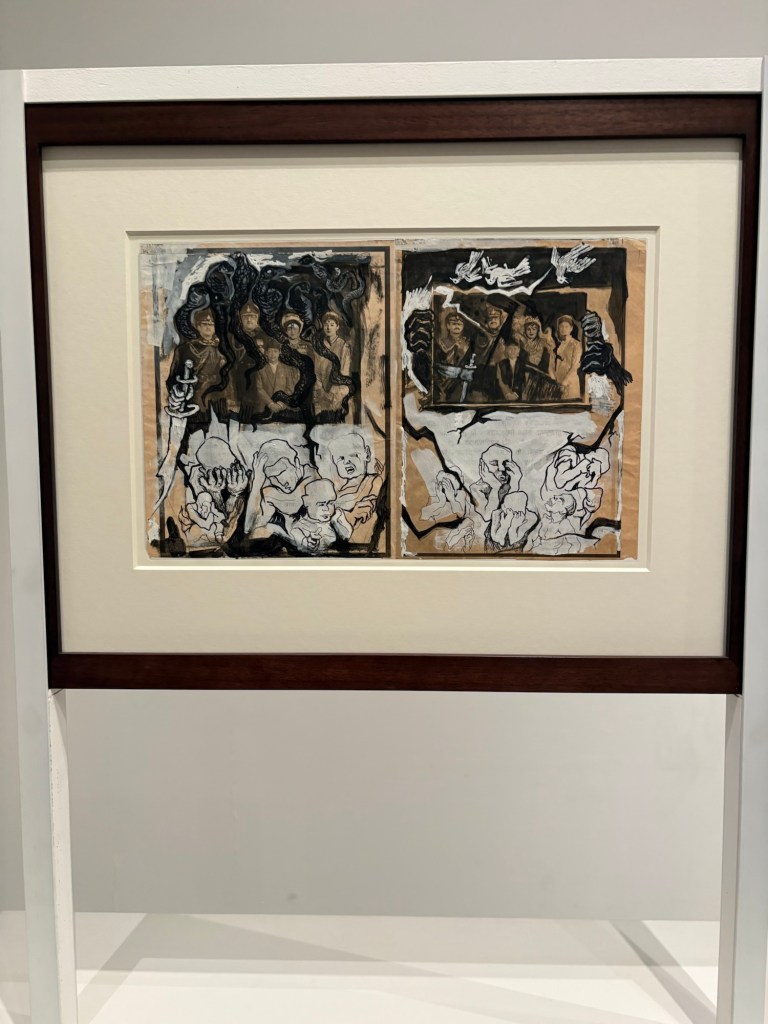
Gyanendra became King of Nepal in 2001 following the death of his brother King Birendra and his nephew Crown Prince Dipendra. He was the last king of Nepal, reigning until the dissolution of the monarchy in 2008. In the painting Crown Prince Dipendra is depicted with a sword in hand. Below are grieving figures where artist wants to show how the entire nation was affected by the assassination.
The next room had a collection of protest art by an anonymous feminist group. The Guerrilla Girls were an activist group of women artists and art professionals, formed in 1985, in response to an exhibition at the Museum of Modern Art in New York which featured only 13 women out of 169 artists. Their text-based posters drip with wit and sarcasm, holding Euro American institutions accountable for their actions. This dry sense of humour on backgrounds of pop pinks and yellows contrasts with the harrowing story of inequality being told about the art industry.
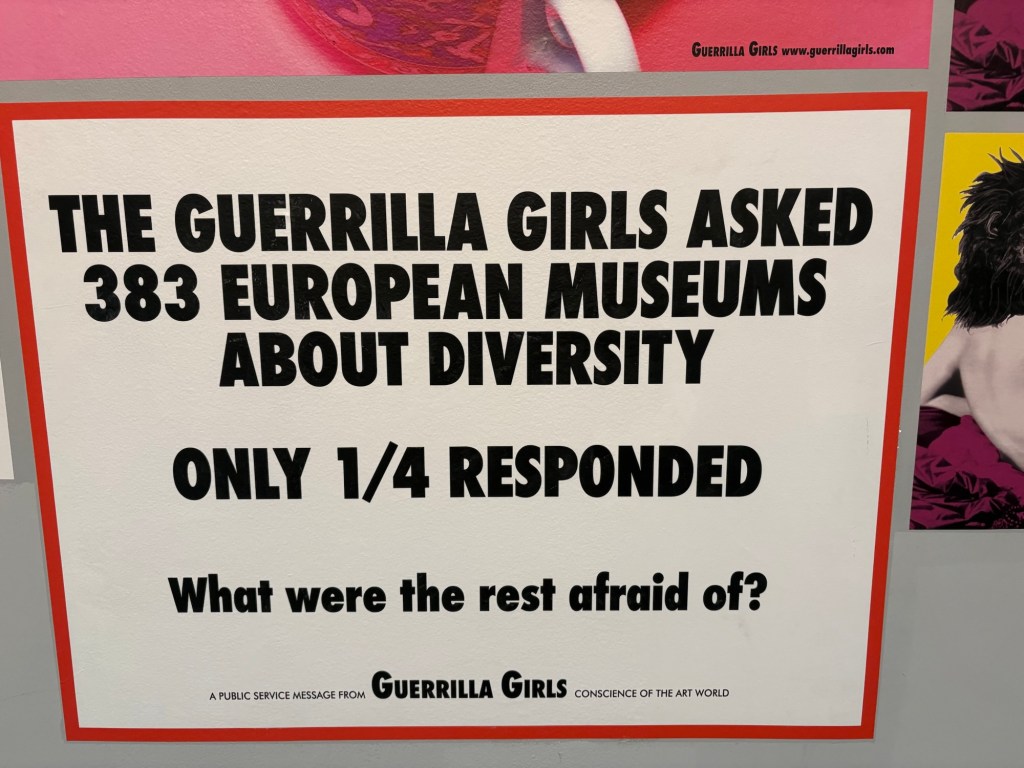
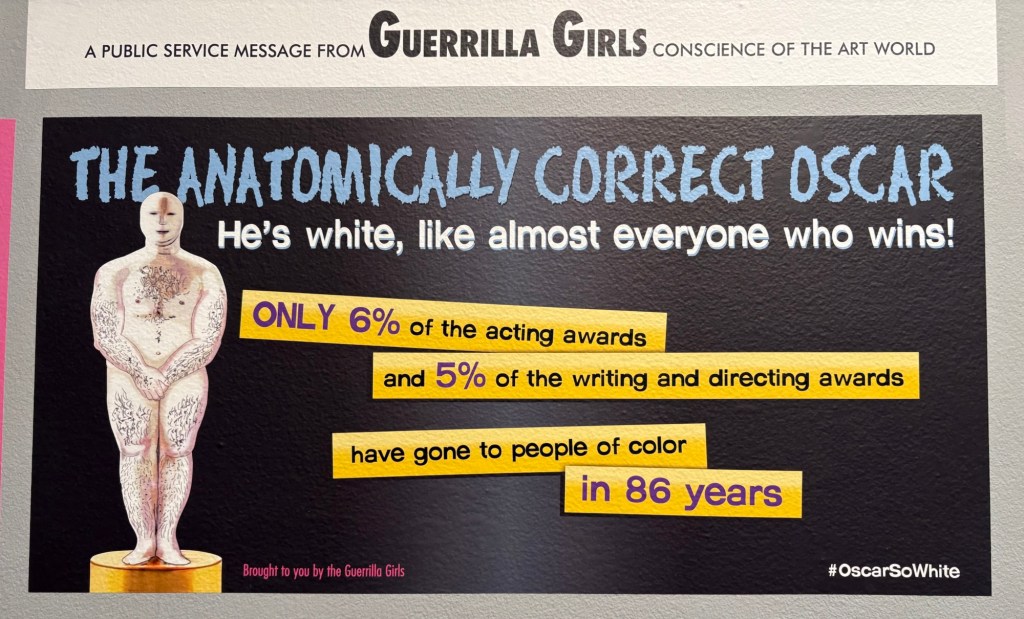
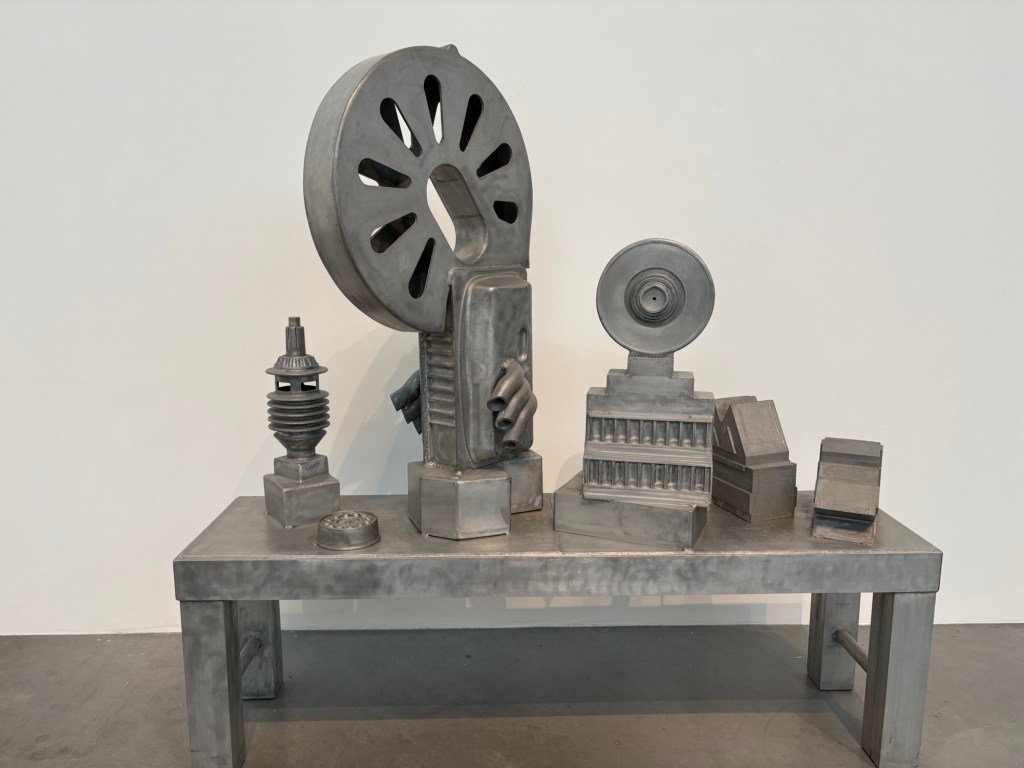
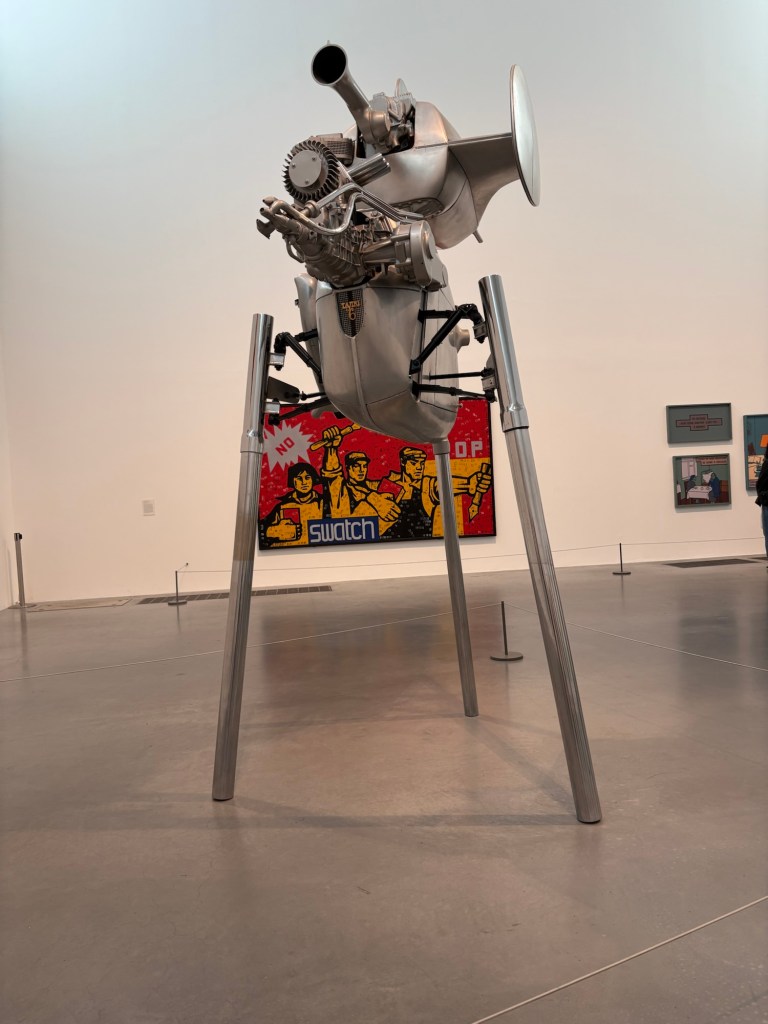
Among the hundred other art works we saw the meaning of which this novice can hardly fathom, these machine like installations were fascinating.
Eduardo Paolozzi’s (1924-2005) ‘Mechaniks Bench’, 1963, eliminated the ‘arty’ qualities and instead aimed for an impersonal, engineered feel.
Shinkichi Tajiri’s (1923-2009) ‘Machine No. 6’ (1967) is one of a series of sculptural works made from recycled meta. Sleek panels, gun-like forms and engine parts combine to create a futuristic robot. Working at the height of the Cold War, Tajiri was interested in exploring connections between speed, technology, warfare and modernity.
To add to joy of viewing the art works we saw, the view of St Paul’s Cathedral and the Millennium Bridge was mind blowing!